
Aluminium Toxicity: The Hidden Metal Burden Affecting Your Health
Aluminium is in our food, drinking water, household products and medications, yet most people rarely think about how much enters their bodies over a lifetime. When my health crashed, aluminium turned out to be an important part of the picture.
 Esther, Natural Health Consultant — detox and parasite cleansing
·
4 minute read
On this page
- Could Aluminium Be Part of the Picture?
- Where Does Aluminium Exposure Come From?
- Food and Food Additives
- Cooking Equipment and Food Packaging
- Personal Care Products
- Drinking Water
- Air and Occupational Exposure
- Medications and Pharmaceuticals
- Let’s Look More Closely at Aluminium
- You’re Not Alone in This
- Where to Start
- Frequently Asked Questions
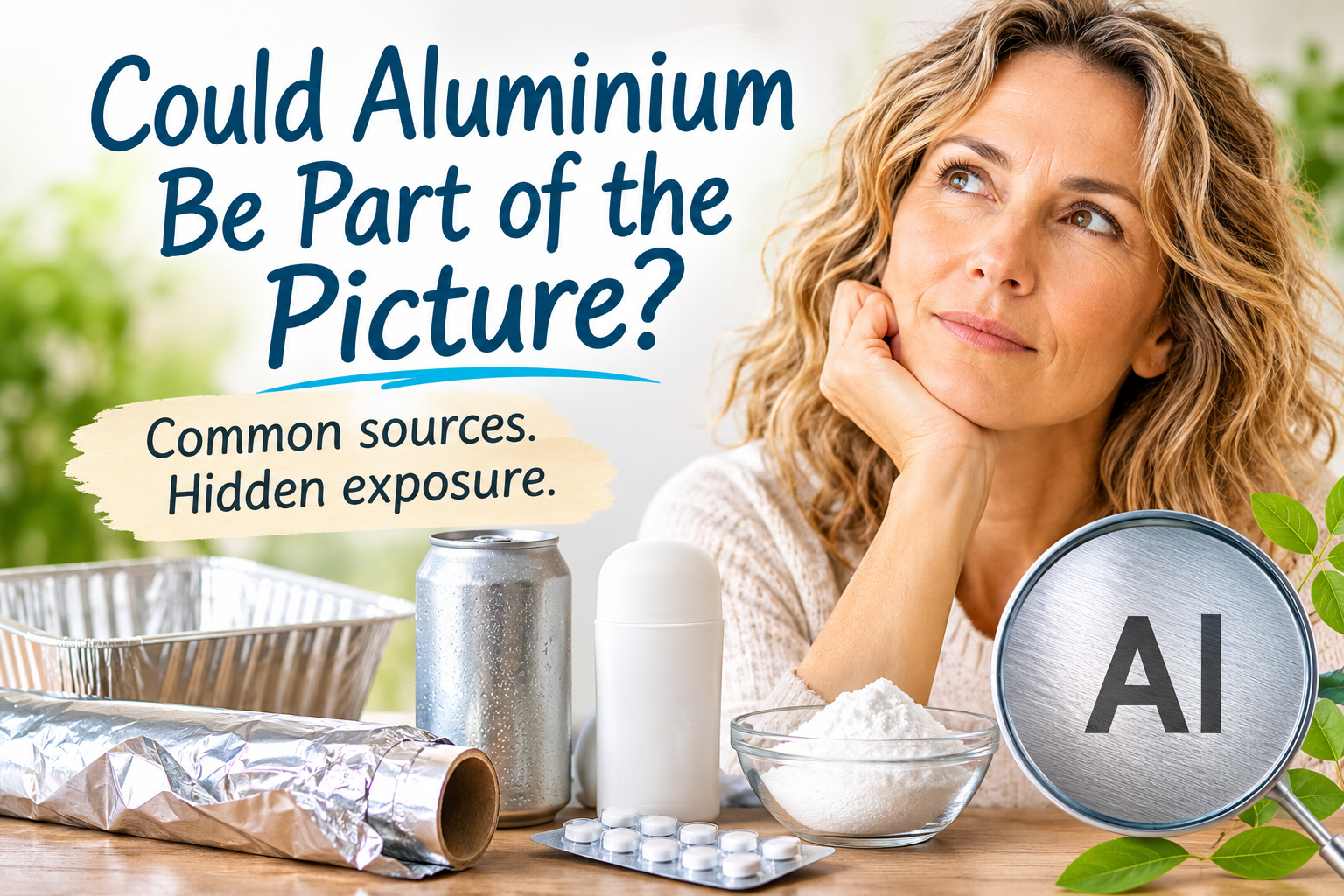
Could Aluminium Be Part of the Picture?
Aluminium is one of the most abundant elements on Earth. It is found in our food, drinking water, household products, medications and everyday environment.
Yet most people rarely think about how much aluminium they are exposed to, let alone how much may be entering their bodies over a lifetime.
When my health completely crashed, I was left with a long list of symptoms that no one could fully explain. What I eventually discovered was that toxic element exposure, particularly aluminium, was an important part of the picture I needed to investigate.
I had spent years trying to understand why my body wasn’t functioning properly. My experience led me to look much deeper into the toxic burden I was carrying.
Where Does Aluminium Exposure Come From?
We are exposed through our food, water, air, personal care products and medications.
Some of the most common sources include:
Food and Food Additives
Aluminium can enter our diet through naturally occurring sources and food additives.
Look out for:
- Baking powder and raising agents containing aluminium compounds.
- Processed baked goods, particularly some commercial breads, cakes and biscuits.
- Anti-caking agents used in powdered foods.
- Certain emulsifiers, stabilisers and food colourings.
- Processed and packaged foods containing aluminium-based additives.
- Tea leaves, which can naturally accumulate aluminium from soil.
Cooking Equipment and Food Packaging
Everyday kitchen items can also contribute to exposure.
- Aluminium foil used for cooking in the oven or on the barbecue.
- Aluminium baking trays.
- Aluminium cookware.
- Aluminium cans and food containers.
Personal Care Products
One source I became particularly interested in was my deodorant.
Many conventional antiperspirants contain aluminium compounds, such as aluminium chlorohydrate, which reduce sweating.
Drinking Water
Aluminium can occur naturally in groundwater and may also enter drinking water through treatment processes. Crazy to think that aluminium is added to our drinking water on purpose, to help remove suspended particles!
Air and Occupational Exposure
Industrial environments can be significant sources of aluminium exposure.
Examples include:
- Aluminium smelting and refining.
- Welding and metal fabrication.
- Mining and industrial processing.
- Airborne dust and fumes.
Inhalation can be particularly important because aluminium-containing particles can enter the respiratory system.
Medications and Pharmaceuticals
Other potential sources include:
- Aluminium-containing antacids.
- Certain phosphate-binding medications.
- Some pharmaceutical formulations.
- Aluminium salts used as adjuvants in some vaccines.
The overall exposure depends on the product, frequency of use and route of exposure.
Let’s Look More Closely at Aluminium
Aluminium is particularly interesting because exposure is so widespread.
In the toxin testing I have undertaken and in testing I have reviewed with clients, aluminium has repeatedly appeared at medium or high levels.
Even when we eat relatively clean diets and make conscious efforts to avoid chemicals, environmental exposure can still occur.
You’re Not Alone in This
I spent years feeling like my body was working against me.
Understanding the possible role of environmental toxins, particularly aluminium, was one of the turning points in my health journey.
Reducing unnecessary exposure, addressing my gut health and working on my body’s natural elimination processes helped me move away from constant survival mode and towards feeling like myself again.
I know what it feels like to have unexplained pain, persistent brain fog, crushing fatigue and a body that simply doesn’t seem to respond to the usual approaches.
Sometimes we need to look beyond the obvious.
If you’ve been struggling with unexplained symptoms and haven’t found lasting answers, investigating your environmental exposure may be another avenue worth exploring.
Test, don’t guess. Understand your body. Take ownership of your health.
Where to Start
From our range, a binder for the metal burden this article describes: CellCore HM-ET Binder.

Frequently Asked Questions
Where does aluminium exposure come from?
Aluminium exposure comes from food and food additives, cooking equipment and food packaging, personal care products such as antiperspirants, drinking water, air and occupational exposure, and some medications. The overall exposure depends on the product, frequency of use and route of exposure.
Which foods contain aluminium?
Baking powder and raising agents with aluminium compounds, processed baked goods such as some commercial breads, cakes and biscuits, anti-caking agents in powdered foods, certain emulsifiers, stabilisers and food colourings, and packaged foods with aluminium-based additives. Tea leaves can also accumulate aluminium naturally from the soil.
Does deodorant contain aluminium?
Many conventional antiperspirants contain aluminium compounds, such as aluminium chlorohydrate, which reduce sweating.
Is aluminium added to drinking water?
Aluminium can occur naturally in groundwater, and it may also enter drinking water through treatment processes, where it is added on purpose to help remove suspended particles.
If this sounded familiar
- How EMF Remediation in My Home Finally Supported Deeper Healing
- Mercury Toxicity: Hidden Dangers of Silver Fillings and Safe Detox
- Breast Implant Illness: When Breast Implants Make You Sick
Book a free Health Discovery Session
Thirty minutes, no obligation, with Esther, who has lived it herself. Tell her what you have already tried and you will get an honest read on whether her approach fits what you need, with room for your questions, your worries, and anything else about healing.