
POTS: The Silent Epidemic Behind Fatigue, Dizziness, and Brain Fog
POTS is a complex and under-recognised condition that stems from dysfunction in the autonomic nervous system, yet it is often misdiagnosed as anxiety.
 Esther, Natural Health Consultant — detox and parasite cleansing
·
7 minute read
On this page
- What Are the Symptoms of POTS?
- Lifestyle Strategies Supporting POTS Recovery
- Nourish Your Body
- Support Hydration & Circulation
- Reduce the Toxic Load
- Move Mindfully
- Regulate the Nervous System
- Is POTS Just Anxiety?
- Personalised, Holistic Support for POTS Recovery
- Frequently Asked Questions
- References
Postural Orthostatic Tachycardia Syndrome (POTS) is a complex and under-recognised condition that affects millions worldwide—yet remains poorly understood, even by many doctors. Often misdiagnosed as anxiety, POTS is now known to stem from dysfunction in the autonomic nervous system, which governs key bodily functions such as heart rate, blood pressure, digestion, and temperature control.
POTS is commonly triggered by infections (such as Lyme disease or Epstein-Barr virus), mould, heavy metals or environmental toxicity, cervical instability, and autoimmune or mitochondrial disorders. More recently, cases have surged following COVID-19 and certain vaccines. Despite these known associations, many patients experience years of misdiagnosis, often being dismissed with psychiatric labels.
What Are the Symptoms of POTS?
Symptoms vary but commonly include a rapid heart rate when standing, dizziness, chest pain, nausea, headaches, brain fog, digestive issues, and poor temperature regulation. In severe cases, POTS can be debilitating—leaving up to 25% of patients unable to attend work or school.
Conventional treatment relies heavily on medications like beta blockers or SSRIs, but these often cause side effects and may worsen the condition if the root cause is ignored. Instead, addressing underlying drivers such as toxicity, chronic infections, inflammation, and nutrient deficiencies is proving more effective.

Lifestyle Strategies Supporting POTS Recovery
Nourish Your Body
- Eat a healing diet rich in whole, unprocessed, nutrient dense foods
- Include healthy fats like olive oil, coconut oil & grass-fed butter
- Enjoy fermented foods & low-glycaemic fruits and vegetables
- Focus on blood sugar regulation, avoid high carbohydrate foods
Support Hydration & Circulation
- Stay well-hydrated throughout the day
- Increase salt intake (as advised) to support blood volume and adrenal health
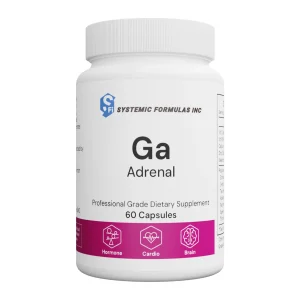
- Take a top quality adrenal support product, like Systemic Formulas Ga Adrenal.
Reduce the Toxic Load
- Follow a structured detoxification program that supports drainage first (liver, lymph, gut)
- Clear parasites and toxins before targeting deeper infections
- Choose clean personal care, household products & distilled water to reduce daily exposures
- Reduce glyphosate exposure by choosing organic produce when possible and avoiding herbicide-treated foods
Move Mindfully
- Start with gentle, graded exercise appropriate for your energy levels
- Promote bowel regularity with quality fat, hydration, and abdominal massage
- Stimulate the vagus nerve through humming, gargling, or red light therapy
Regulate the Nervous System
- Practise deep breathing and relaxation exercises daily
- Reduce stress with mindfulness, journaling, or spending time in nature
- Prioritise restorative movement like stretching or yoga to calm the body
Is POTS Just Anxiety?
Importantly, POTS is not “just in your head”—though many are told otherwise. The overlap with anxiety symptoms has led to high rates of misdiagnosis, particularly in women. However, research confirms a strong biological basis, including inflammation, nervous system damage, and toxic burden.
POTS demands a personalised, root-cause-focused approach. With proper care—including detoxification, nutritional support, and nervous system regulation—many individuals can experience significant relief or remission. Early diagnosis, compassionate care, and a shift from symptom suppression to true healing are essential steps forward.
Personalised, Holistic Support for POTS Recovery
At Esther Hills Nutrition, we search for the root causes of your illness. Often, there are several contributing factors that only surface when your body is ready to excrete them. We help guide you toward improvement—and in many cases, full recovery from POTS.
Our personalised approach is tailored to your body, recognising that no two people are the same. By using a holistic framework, we provide your body with what it needs to return to balance. When that balance is restored, your immune system, gut, and brain can function optimally again—eliminating symptoms naturally.
What we use for this
Frequently Asked Questions
What is POTS?
Postural Orthostatic Tachycardia Syndrome (POTS) is a complex and under-recognised condition that stems from dysfunction in the autonomic nervous system, which governs heart rate, blood pressure, digestion and temperature control. It affects millions worldwide, yet remains poorly understood, even by many doctors, and it is often misdiagnosed as anxiety.
What causes POTS?
POTS is commonly triggered by infections such as Lyme disease or Epstein-Barr virus, mould, heavy metals or environmental toxicity, cervical instability, and autoimmune or mitochondrial disorders. Cases have also surged following COVID-19 and certain vaccines. Often there are several contributing factors, which is why we search for the root causes of your illness.
What are the symptoms of POTS?
Symptoms vary, but commonly include a rapid heart rate when standing, dizziness, chest pain, nausea, headaches, brain fog, digestive issues and poor temperature regulation. In severe cases POTS can be debilitating, leaving up to 25% of patients unable to attend work or school.
Is POTS just anxiety?
No. POTS is not just in your head, though many are told otherwise. The overlap with anxiety symptoms has led to high rates of misdiagnosis, particularly in women. Research confirms a strong biological basis, including inflammation, nervous system damage and toxic burden.
How can you support POTS recovery naturally?
Address the underlying drivers, such as toxicity, chronic infections, inflammation and nutrient deficiencies. That means a nourishing whole-food diet with steady blood sugar, good hydration and salt, a structured detox that supports drainage first, gentle graded exercise, and calming the nervous system with deep breathing, humming or gargling.
References
- Vagus Nerve Stimulation as a Treatment for POTS
Study: University of Oklahoma College of Medicine
Summary: Non-invasive ear-clip vagus nerve stimulation reduced POTS symptoms by modulating autonomic nervous system activity.
Link: ou.edu - Transcutaneous Vagus Nerve Stimulation (tVNS) for POTS
Study: Journal of the American College of Cardiology: Clinical Electrophysiology
Summary: tVNS improved autonomic function and reduced inflammation and immune markers in POTS patients over two months.
Link: neurologyadvisor.com, sciencedirect.com - Mould Exposure and Its Neurological Effects Related to POTS
Study: International Journal of Molecular Sciences
Summary: Mould exposure was significantly associated with neurological disorders like POTS and ME/CFS, supporting an environmental trigger theory.
Link: agemed.org, drtoddmaderis.com, drjessmd.com - Mould Exposure and POTS: A Clinical Perspective
Study: Article by Dr. Becky Campbell
Summary: Mycotoxins from indoor mould can lead to immune activation and autonomic dysfunction, contributing to POTS symptoms.
Link: drbeckycampbell.com - COVID-19 Vaccination and the Onset of POTS
Study: Cedars-Sinai’s Smidt Heart Institute
Summary: Some patients developed POTS after receiving COVID-19 mRNA vaccines, highlighting a need for research into post-vaccine autonomic issues.
Link: cedars-sinai.org - Toxic Effects of Glyphosate on the Nervous System: A Systematic Review
Summary: Glyphosate exposure causes oxidative stress, neuroinflammation, and mitochondrial dysfunction, potentially contributing to POTS. - Glyphosate Infiltrates the Brain and Increases Pro-Inflammatory Cytokines
Summary: Animal studies show glyphosate crosses the blood-brain barrier and elevates inflammatory markers, potentially affecting the autonomic system. - Glyphosate Can Have ‘Persistent, Damaging’ Effects on Brain Health
Glyphosate Infiltrates the Brain and Increases Pro-Inflammatory Cytokines
Summary: Even low glyphosate doses can cause lasting brain inflammation and increase the risk of autonomic dysfunction and neurodegeneration. - Dysautonomia Following Lyme Disease (2024)
Study: Frontiers in Neurology
Summary: PTLDS can involve dysautonomia, including POTS, due to lingering immune and neurological disruptions post-Lyme infection. - Postural Orthostatic Tachycardia Syndrome Following Lyme Disease (2011)
Study: Cardiology Journal
Summary: Case series showed POTS development post-Lyme, with symptoms like dizziness, fatigue, and cognitive issues. - Understanding the Relationship Between Dysautonomia and Lyme Disease
Study: Project Lyme
Summary: Lyme disease and POTS share symptoms, and Lyme may trigger autonomic dysfunction via immune and nervous system involvement. - The Lyme + POTS Connection
Study: RawlsMD
Summary: Describes how chronic infections from Lyme can lead to POTS and outlines treatment strategies addressing both. - POTS and Lyme Disease Patients
Study: Dr. Daniel Cameron
Summary: Several cases show POTS emerging after Lyme, urging better clinician awareness to avoid misdiagnosis. - Exploring the Overlap Between Dysautonomia and Lyme Disease
Study: Project Lyme
Summary: Lyme patients should be screened for POTS symptoms, especially when presenting with unexplained fatigue or tachycardia. - Lyme Disease and Postural Orthostatic Tachycardia Syndrome
Study: Dr. Tania Dempsey
Summary: GI symptoms are common in POTS/Lyme overlap; treating infections often improves autonomic issues. - POTS & Lyme Disease: Is There a Link?
Study: MyHeart.net
Summary: Case review of five patients showed temporal and symptomatic correlation between Lyme and POTS onset. - Coping with POTS in Conjunction with Chronic Lyme Disease
Study: LymeDisease.org
Summary: Describes common challenges and treatment approaches for those with both Lyme disease and POTS. - Dietary Interventions in Managing POTS Symptoms
Study: Standing Up To POTS
Summary: A gluten-free diet led to a 45% reduction in symptoms in POTS patients over four weeks. - POTS: A Frequently Missed Diagnosis
Study: The Nurse Practitioner journal
Summary: Many providers are unaware of POTS, leading to delayed or incorrect diagnosis and treatment. - Dysautonomia International – POTS Summary
Summary: Highlights multiple causes of POTS, including heavy metal toxicity, trauma, chemo, and autoimmunity. - AHA Journals – Circulation Review on POTS
Summary: A review covering causes, including toxic exposure, and emphasising thorough patient evaluation. - MedLink Neurology – POTS Overview
Summary: Identifies heavy metal toxicity as a possible secondary cause and stresses comprehensive care. - MyBioHack – POTS and Heavy Metal Toxicity
Summary: Explains how environmental toxins like mercury can lead to oxidative stress and autonomic instability.
If this sounded familiar
- When High LDL Cholesterol Is a Sign Your Body Needs Support
- Heart Disease: Understanding the 4 Causes, Myths and Supplements
Book a free Health Discovery Session
Thirty minutes, no obligation, with Esther, who has lived it herself. Tell her what you have already tried and you will get an honest read on whether her approach fits what you need, with room for your questions, your worries, and anything else about healing.