
Mould is a biotoxin—a living biological organism that behaves very differently from other toxins such as heavy metals or synthetic chemicals. It thrives in warm, moist environments, which unfortunately makes the human body an ideal host when conditions allow it to take hold. As mould grows, it produces harmful compounds known as mycotoxins. These are highly toxic substances, many of which are considered carcinogenic. Mycotoxins attach to mould spores and can enter the body in several ways—most commonly through inhalation, but also through skin contact or contaminated food.
Researchers have identified over 300 different types of mycotoxins, though clinical attention tends to focus on the ones known to have the most significant impact on human health. For most people, breathing in mould spores from indoor environments is the primary source of exposure.
Symptoms of Mould and Mycotoxin Exposure
When my clients present with strange, vague, or unexplained symptoms, mould toxicity is something I always consider. Exposure to mould and mycotoxins can trigger a wide range of unusual symptoms, particularly in individuals whose immune systems are already under strain.
Unfortunately, these symptoms are often dismissed in conventional medical settings and sometimes attributed to psychological causes. Yet mould toxicity is very real, diagnosable, and treatable. In many cases, a sudden or unexplained decline in health can be an important warning sign.
Mould exposure can create a surprising range of symptoms, including some that feel unusual or difficult to explain:
• Electric shock-like sensations
• Sharp, ice-pick-like pains
• Pulsating or vibrating sensations along the spine
• Muscle weakness
• Numbness or tingling in different areas of the body
• Vertigo, dizziness, or lightheadedness
• Severe anxiety, depression, or even seizures
• Persistent fatigue
• Joint and muscle pain
• Chest tightness or discomfort

Mould’s Stealth Strategy
Mould cunningly snacks on and “kidnaps” your white blood cells, diverting the immune system while releasing mycotoxins—potent poisons that inflame tissues and irritate immunity without letting it clearly see or target the mould itself.
Mycotoxins enter the bloodstream and can quickly irritate the liver and biliary ducts, slowing bile flow and creating stagnation—an environment where toxins can linger and accumulate.
How Mould Establishes Itself
Having co-evolved with humans, mould can be remarkably persistent. It feeds directly on host resources, disrupts beneficial microbes, interferes with detox pathways, and promotes ongoing inflammation. Over time, this can weaken the body and allow mould and its toxins to persist long-term. Detoxing mould from the body can take time—but with the right protocol, some people begin to feel relief surprisingly quickly.
7 Steps to Follow if You’ve Been Exposed to Mould
If mould exposure is suspected, these foundational steps can help support the body’s recovery:
- Binders (Essential Support)
Binders are non-negotiable when dealing with mycotoxins. Many people do well with Biotoxin Binder from CellCore. But some highly sensitive people need a milder approach. - Inspect for Dampness
Check your home for visible mould, water damage, or musty smells. Detoxing will be ineffective if exposure continues. - Parasite Removal
Parasites often coexist with mould toxicity and may need to be addressed as part of a comprehensive mould protocol or separate from it. - Sinus Care
Inhaled mould spores can form biofilms in the sinuses. Devices such as a Navage or nebuliser may help support sinus cleansing. - Food Safety
Consume leftovers within two days and discard any food showing signs of fungal contamination. - Dietary Changes
Avoid white sugar and dairy products. Sugar can feed mould, and dairy may contribute to biofilm formation. - Improve Air Quality
Using a high-quality air purifier can help reduce airborne mould spores, microbes, and allergens in your environment.
Not Sure Where to Start?
If you suspect mould exposure and need guidance on the next steps, personalised support can make the process much clearer.
Book a FREE Health Discovery Session to start identifying the root cause and begin your recovery plan.
Testing for Mould
My own Mycotoxin Test
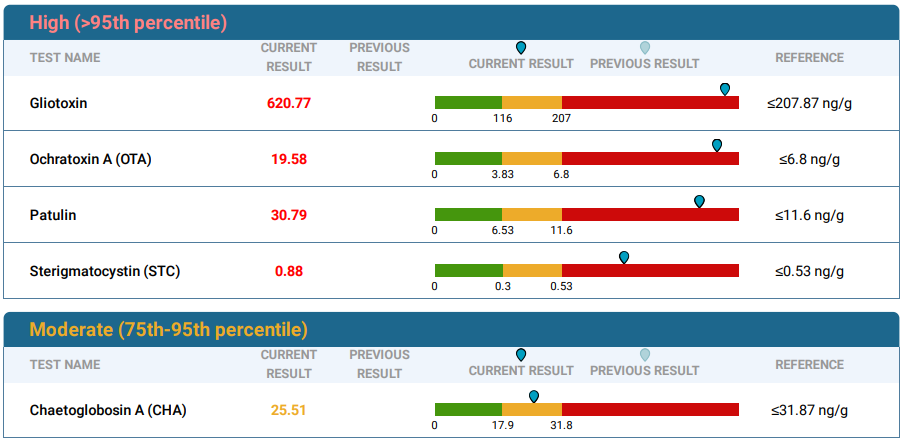
I have used the Mycotoxin Test from Vibrant America, which revealed four high mycotoxin markers and one moderate marker. These were the toxins I needed to address:
Gliotoxin
Often associated with Candida and commonly found in compost, decaying leaf piles, and water-damaged buildings.
Ochratoxin A
A toxin that can damage the kidneys. It may be found in barley, oats, rye, wheat, coffee beans, and other plant products.
Patulin
Often present in contaminated fruits such as apples and apple products (juice or cider) affected by blue mould.
Sterigmatocystin
Found in crops such as grains, corn, nuts, cheese, and coffee. Rice and oats can also be susceptible.
Example of Chronic Fatigue and Mould Exposure
Research has found a strong association between mould exposure and Chronic Fatigue Syndrome (CFS). In one study, approximately 90% of individuals with CFS had spent significant time in water-damaged buildings. Additionally, 93% had at least one type of mycotoxin present in their urine, while healthy participants showed no detectable levels.
Please remember:
𝒀𝒐𝒖 𝒂𝒓𝒆 𝒏𝒐𝒕 𝒃𝒓𝒐𝒌𝒆𝒏.
Your body is incredibly resilient and always on your side. Sometimes we just need to give it the right support, and let it do what it’s designed to do — heal and thrive 
Take Control of Your Mould today
If you suspect mould or other toxicity, don’t wait and keep suffering — there is a way forward. If you’re unsure where to start, we’re here to help. You can book a free Health Discovery Session to begin your journey toward relief.
Book Your Free Health Discovery Session
By Esther Croysdill 9/3/26


