
Why Your Liver Is Not Keeping Up
Liver detoxification isn't simply one process. Phase 1 transforms, Phase 2 conjugates and Phase 3 transports, and each stage relies on the next.
 Esther, Natural Health Consultant — detox and parasite cleansing
·
5 minute read
On this page
When we talk about detoxification, the liver is one of the first organs that comes to mind. And for good reason.
Every day, the liver is working to process a huge range of compounds — including environmental chemicals, pesticides, pharmaceutical metabolites, excess hormones and other substances the body needs to transform and eliminate.
Some of these compounds are fat-soluble, meaning they dissolve in fat rather than water. This makes them more challenging for the body to eliminate.
The liver therefore needs to transform these compounds through a series of coordinated steps known as Phase 1, Phase 2 and Phase 3 detoxification. Let’s take a look at what happens.
Understanding Phases 1, 2 & 3
🔬 Phase 1 — Biotransformation
The Liver Begins Modifying the Compound
Phase 1 is often described as the activation or biotransformation phase.
The liver uses enzymes, including the cytochrome P450 enzyme system, to chemically modify compounds through processes such as:
- Oxidation
- Reduction
- Hydrolysis
These reactions change the structure of the compound and prepare it for the next stage of detoxification.
⚠️ Phase 1 Can Create More Reactive Intermediates
Here’s where things get interesting.
The compounds created during Phase 1 can sometimes be more reactive or oxidative than the original compound. This means Phase 1 needs to work in balance with Phase 2.
If Phase 1 is producing reactive intermediates faster than Phase 2 can process them, these intermediates may accumulate and contribute to oxidative stress – creating inflammation.
This is why supporting detoxification isn’t simply about trying to make Phase 1 work harder. The different phases need to work together.
Certain B vitamins, minerals and antioxidants are involved in supporting the enzymes and reactions taking place during this stage.
🧬 Phase 2 — Conjugation
Preparing Compounds for Elimination
Once Phase 1 has modified the compound, Phase 2 takes over. This stage is known as conjugation.
The liver attaches water-soluble molecules to the reactive compounds produced during Phase 1.
Common Phase 2 pathways include:
- Glucuronidation
- Sulfation
- Glutathione conjugation
- Methylation
- Acetylation
- Amino-acid conjugation
These reactions help make compounds less reactive and more water-soluble, allowing them to be transported out of the liver cell.
🌿 Your Liver Needs the Right Building Blocks
These pathways require specific substrates and cofactors. The body needs adequate resources to support processes involving:
- Glutathione
- Sulfur-containing compounds
- Amino-acids
- B vitamins—especially B6, folate, B12, B5
- Supporting cofactors—magnesium, selenium, molybdenum
The liver needs the raw materials to do the work.
🚪 Phase 3 — Transport & Export
Getting Processed Compounds Out of the Liver
Phase 3 is the transport and export stage.
Once compounds have been modified and conjugated, specialised transport proteins help move them out of the liver cells.
From there, they can be directed towards different elimination pathways, including:
- The bloodstream for eventual renal elimination
- Bile and the digestive tract for faecal elimination
What often goes wrong is that people supplement with glutathione (or a precursor) without Phase 3 working properly. This can make you feel really unwell.
The body also needs to be able to move it out.
🔄 Putting the Three Phases Together
The process can be simplified like this:
Phase 1
Biotransformation
The liver modifies the compound, often making it more chemically reactive.
⬇️
Phase 2
Conjugation
The liver attaches water-soluble molecules to the compound, helping to neutralise it and prepare it for elimination.
⬇️
Phase 3
Transport & Export
The processed compound is moved out of the liver cell towards the appropriate elimination pathway.
⬇️
Elimination
The body can then remove the processed compound through routes such as the kidneys or digestive tract.
💚 The Takeaway
Liver detoxification isn’t simply one process. It is a carefully coordinated system.
Phase 1 transforms.
Phase 2 conjugates.
Phase 3 transports.
And each stage relies on the next.
This is why I believe it’s important to look at the whole detoxification pathway, rather than simply trying to “detox the liver” harder.
The goal isn’t to push one phase as hard as possible. It’s about supporting the body’s natural ability to process, transform, transport and eliminate unwanted compounds efficiently.
Support the pathway your body actually needs. 💚
The information on this website is for educational purposes only. It is not intended to diagnose, treat, cure or prevent any medical condition. Please consult your qualified healthcare practitioner before starting any new program, especially if you have a medical condition or are taking medication. Services are general holistic wellness support, not clinical treatment
Where to Start
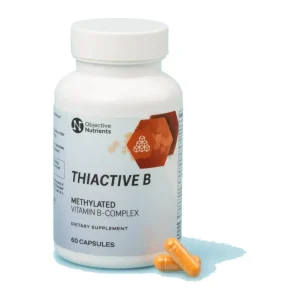
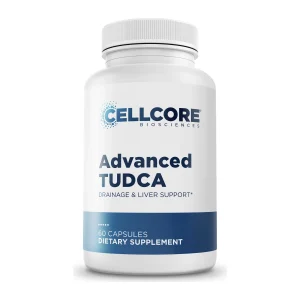
A good place to start: CellCore Advanced TUDCA for bile flow and Phase 3, Objective Nutrients ThiActive B for the B vitamins and Objective Nutrients Glutathione NACET Complex once Phase 3 is moving.

Frequently Asked Questions
What are the three phases of liver detoxification?
Phase 1 is biotransformation: the liver modifies a compound, often making it more chemically reactive. Phase 2 is conjugation: the liver attaches water-soluble molecules to neutralise it. Phase 3 is transport and export: the processed compound is moved out of the liver cell towards the kidneys or the digestive tract.
What happens in Phase 1 liver detox?
The liver uses enzymes, including the cytochrome P450 enzyme system, to modify compounds through oxidation, reduction and hydrolysis. The compounds this creates can be more reactive than the original, so Phase 1 needs to work in balance with Phase 2.
What nutrients does Phase 2 liver detox need?
Phase 2 needs glutathione, sulfur-containing compounds and amino acids, B vitamins (especially B6, folate, B12 and B5) and cofactors such as magnesium, selenium and molybdenum.
Why can glutathione make you feel unwell?
Glutathione supports Phase 2, but the processed compounds still have to leave the liver in Phase 3. Supplementing with glutathione or a precursor while Phase 3 is not working properly can make you feel really unwell.
What is Phase 3 detoxification?
Phase 3 is the transport and export stage. Specialised transport proteins move processed compounds out of the liver cells, into the bloodstream for elimination through the kidneys, or into bile and the digestive tract.
If this sounded familiar
- How to Choose Clean, High-Quality Supplements
- Lipedema and Inflammation: Toxins, Diet and Lymphatic Health
- Longevity and True Healing: 7 Ideas You Can Start Today
Book a free Health Discovery Session
Thirty minutes, no obligation, with Esther, who has lived it herself. Tell her what you have already tried and you will get an honest read on whether her approach fits what you need, with room for your questions, your worries, and anything else about healing.